
ADR Shipping Rules for Rocket Engines
You can’t send model rocket engines through normal post in the UK. They must go by an ADR-approved courier, need the right labels and UN markings, and must be signed for by an adult aged 18+.
If I were ordering rocket motors, I’d check four things first:
- Shipping method: standard parcel services are not allowed
- Packing: keep motors, such as those for the Sky Piercer model rocket kit, in the maker’s packaging, inside a strong outer box
- Labels: hazard labels and the UN number must stay clear and visible
- Delivery checks: inspect the box, count the items, and report any issue within 48 hours
There’s also a clear cost gap. A normal parcel might be about £5.99, while ADR delivery for rocket motors can be about £23.50. That extra cost comes from trained handling, legal controls, and the type of courier needed.
If the parcel arrives crushed, wet, torn, leaking, or hot, I would stop handling it, keep people away, take photos, and contact the supplier. If there is smoke or heat, I would evacuate and call emergency services.
| Check | Standard parcel | Rocket engine parcel |
|---|---|---|
| Carrier | Normal courier | ADR-approved courier only |
| Typical cost | £5.99 | £23.50 |
| Age check | Usually none | 18+ signature required |
| On arrival | Basic box check | Box, labels, quantity, damage |
| If damaged | Normal customer service process | Isolate, photograph, report fast |
So the short version is simple: rocket engines are dangerous goods for transport, and that changes how they must be packed, labelled, shipped, received, and reported if anything goes wrong.
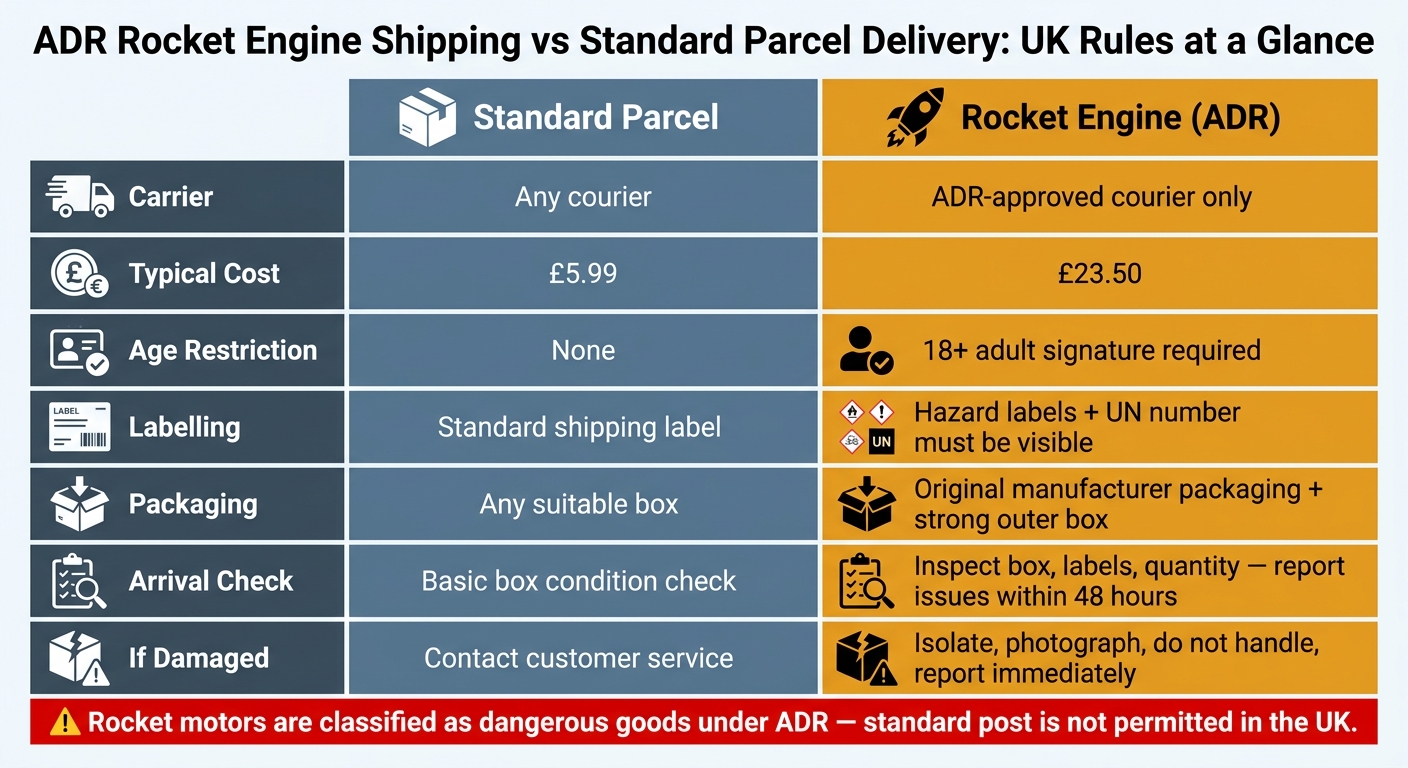
ADR Rocket Engine Shipping vs Standard Parcel: UK Rules at a Glance
ADR basics and how rocket engines are classified
Model rocket motors are dangerous goods, so they have to move under ADR controls. In the UK, ADR covers the road transport of dangerous goods, and model rocket motors fall into that category for transport. That status decides how a parcel must be packed and labelled.
Why model rocket engines cannot be sent like standard post
For buyers and schools, the main takeaway is simple: ordinary post is not an option. Rocket motors cannot go by standard post. They have to be sent through an ADR-approved courier with trained staff.
That’s why retailers often switch off standard post at checkout when motors are in the basket. On top of that, the sender must hold the right explosive licensing before anything is dispatched.
Why the exact classification matters
The exact classification is what drives the shipping rules. The UN number, hazard class and compatibility group decide the box, labels and transport limits. Get that wrong, and the shipment is non-compliant.
For buyers and schools, it’s worth checking the exact motor class before ordering or signing for delivery.
For larger motors, there can be extra controls. High-power motors such as H-class and above may need certification from organisations like the UK Rocketry Association (UKRA), and transport may also need police notification. That classification then sets the packing, labelling and carrier checks that come next.
sbb-itb-f093e97
Packing and labelling requirements before dispatch
Once you've classified the parcel, the next step is simple: pack it in line with the transport rules for the motor.
Using original packaging and strong outer boxes
Keep rocket motors in their original manufacturer packaging, then place that inside a strong outer box with enough cushioning to stop the contents moving during transit. That extra outer box matters. Even decent inner packaging can fail if it slides around inside a loose box.
Labels and markings that must stay on the parcel
Every parcel carrying rocket motors must show the correct hazard labels and UN identification number on the outside. These markings need to stay clear and fully visible. Don't cover them with tape or shipping labels.
If a label is torn, missing or hard to read, don't hand the parcel to a carrier. If any marking is missing or obscured, stop the dispatch before the parcel leaves.
Table: Original packaging vs repacked parcels
The choice between original and repacked packaging affects both compliance and how easy it is for staff to check the parcel on arrival.
| Feature | Original Approved Packaging | Repacked / Non-Original Packaging |
|---|---|---|
| ADR compliance | Matches the manufacturer's intended transport arrangement | Higher risk of non-compliance if the replacement packaging is not suitable |
| Label retention | Hazard markings are already in place and easy to keep visible | Hazard labels must be applied manually and can be missed |
| Protection level | Designed for the motor's size and transport needs | Needs careful cushioning to stop movement in transit |
| Ease of inspection on receipt | Clear markings make the arrival check faster and safer | Can be harder to verify at the door if markings are missing |
| Suitability | Original packaging is preferred; repacked boxes add compliance risk | - |
Carrier limits, delivery checks and school receiving procedures
Once the parcel is packed and labelled, there’s one more gate to get through: can the carrier legally take it?
Checking whether a carrier can legally accept the shipment
Rocket motors can only be carried by ADR-approved couriers. Standard parcel services can’t take them, so the shipment must go through a carrier that accepts ADR or Dangerous Goods consignments.
The simplest check is to look at the service details before booking. If the carrier doesn’t clearly say it handles ADR or Dangerous Goods, don’t use it. Many UK suppliers make this easy. Add rocket motors to the basket, and any shipping option that doesn’t meet the rules is switched off at checkout.
Delivery also has a handover rule: an adult aged 18 or over must sign for it.
What to check when the parcel arrives
When the parcel turns up, don’t rush the signature. Check the outer box first for any damage or signs of tampering. Then make sure the ADR hazard labels and UN markings are still in place and easy to read. If a label is torn, covered, or missing, flag it straight away.
Next, check the contents against the packing list and make sure the quantity matches the order. If there’s any damage, shortage, or mismatch, report it to the supplier within 48 hours of receipt. After that, move the motors straight into cool, dry, secure storage.
If anything is damaged, stop and report it at once.
Simple receiving steps for schools and clubs
For schools and clubs, a set handover routine matters. Pick a named adult staff member in advance to receive the parcel. That person should inspect it at the door before signing, write down the delivery date and their name in the school’s safety log, and move the motors straight to controlled storage away from pupil areas.
Don’t leave the parcel sitting in reception, even for a short time.
Table: Standard parcel delivery vs ADR-capable rocket engine delivery
| Feature | Standard Parcel Delivery | ADR-Capable Rocket Motor Delivery |
|---|---|---|
| Carrier | Standard couriers | ADR-approved only |
| Shipping cost | Approx. £5.99 | Approx. £23.50 |
| Recipient rules | No age restriction | Adult (18+) only |
| Arrival checks | General condition only | Outer box, ADR labels, quantity, and 48-hour reporting window |
What to do if a rocket engine parcel is damaged
Immediate steps for buyers and schools
If the parcel fails the delivery check, treat it as a damaged-goods incident straight away.
If a parcel arrives crushed, torn, wet, leaking or heat-damaged, stop handling it at once. Keep people back, and do not open or shake it.
If you see smoke, heat or signs of ignition, evacuate at once and call emergency services.
If it can be moved without handling the contents, place the parcel in a cool, dry area away from heat, sunlight and flammable materials. In a school or club, alert the site health and safety lead straight away.
Never test or try to fire a motor that has been dropped, crushed or shows any casing damage.
Who to contact and what records to keep
Once the area is safe, begin the claim process.
Photograph the outer box, labels and damage before you handle it again. Record the delivery date, courier name and order number.
Contact Rocketry for Schools within 14 days of receiving the order. Include your order number, a short description of the damage and your photos. Do not return damaged motors unless the supplier tells you to do so. The supplier will manage the courier claim, and investigations can take up to 14 working days.
Key takeaways
- If a parcel is damaged, isolate it and alert your health and safety lead at once.
- Photograph the box and labels to support the claim.
- Contact Rocketry for Schools within 14 days of receiving a damaged order.
FAQs
Do all rocket engines need ADR delivery?
Yes. In the United Kingdom, all rocket motors are classed as dangerous goods. That means they must be shipped under ADR regulations by couriers with the right training.
Because of these transport rules, rocket motor orders need special handling and can't go out through standard delivery services.
Can a school caretaker sign for the parcel?
Yes, a school caretaker can receive the delivery. But the order itself must be placed by an authorised adult aged 18 or over.
Rocket motors are classed as dangerous goods, so the shipment has to follow ADR rules and go through a specialist courier. Make sure someone over 18 is on site to accept and deal with the delivery.
What if the UN label is missing on arrival?
If a parcel containing rocket motors arrives without the required UN hazardous goods labels, that may point to a breach of ADR transport rules. Do not handle or store the parcel any further.
Contact Rocketry for Schools straight away. Include your order number and photos of the packaging as received so the issue can be checked and dealt with safely.